23 August 2026
Sound Limiters: What You Need to Know Before Booking a Mobile DJ
Sound limiters are increasingly common at wedding venues, village halls and function rooms across the UK. They can help venues manage noise levels, but they can also have a significant impact on live entertainment. Here’s what you need to know about sound limiters before booking a mobile DJ.
What is a sound limiter?
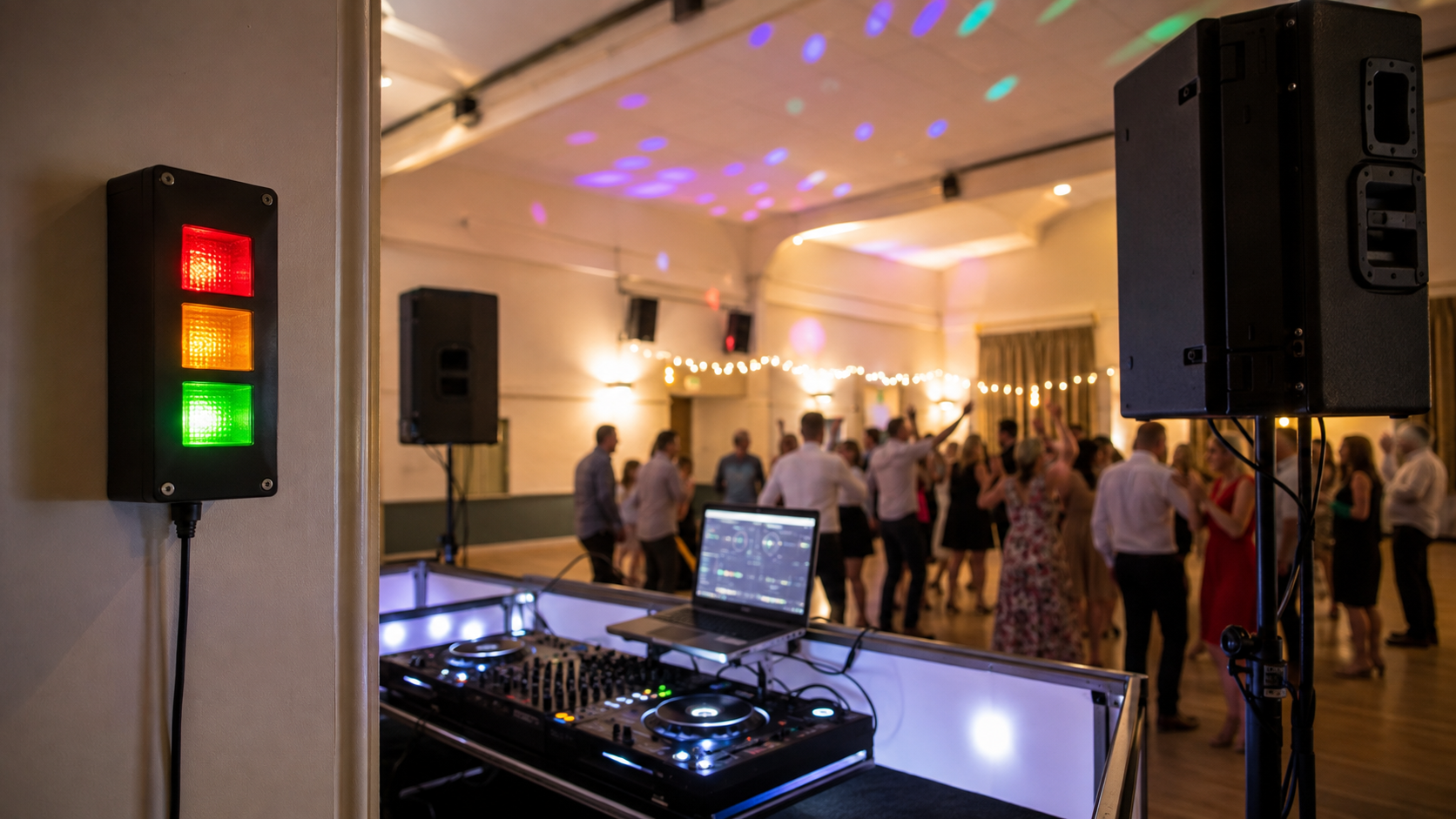
A sound limiter is a device used by some venues to monitor the volume of music and other amplified sound.
They are particularly common in venues such as:
- Village halls
- Community centres
- Hotels
- Barn venues
- Wedding venues
- Function rooms
- Pubs and social clubs
A sound limiter normally uses a microphone or sound sensor positioned somewhere in the room. This continuously measures the sound level, usually in decibels (dB).
If the volume exceeds the venue's preset limit, the system may display a warning. If the sound remains above the permitted level for too long, some systems can disconnect the electrical supply to the DJ or band.
Why do venues use sound limiters?
Venues generally install sound limiters to help manage noise and reduce disturbance to neighbouring properties.
They may form part of the venue's planning conditions, licensing requirements or internal noise-management policy.
From the venue's perspective, a limiter provides a straightforward way of controlling the maximum noise level during weddings, parties and other events.
For DJs and clients, however, the important question is not simply whether a limiter is installed, but what level it is set to and how the system operates.
Are all sound limiters the same?
No.
There can be a considerable difference between one venue and another.
A sensibly configured limiter may allow a DJ to provide perfectly adequate entertainment throughout the evening. A particularly restrictive limiter, however, can make it difficult to produce the sound normally expected at a wedding reception or party.
Factors can include:
- The maximum permitted decibel level
- Where the sound sensor is positioned
- How quickly the limiter reacts
- How long the warning period lasts
- Whether it cuts electrical power
- Which electrical sockets are connected to it
- Whether venue staff can reset the system
- Whether bass frequencies are particularly likely to trigger it
The position of the sensor can make a particularly big difference. A sensor located directly above a dancefloor or close to a loudspeaker may behave very differently from one positioned elsewhere in the room.
Why can sound limiters be a problem for DJs?
Modern recorded music contains significant amounts of bass and low-frequency energy.
A track may not necessarily sound excessively loud to people in the room, but a limiter can still react to certain frequencies or sudden peaks.
There are also other sources of noise at an event.
A cheering crowd, guests singing along or people shouting close to the limiter's microphone can sometimes contribute to the measured sound level.
This means a DJ may need to operate considerably below their normal sound level simply to avoid triggering the system.
What happens if the limiter is triggered?
This depends on the venue.
Some systems simply provide a visual warning, often through a traffic-light style display:
- Green – sound level is acceptable
- Amber – approaching or exceeding the permitted level
- Red – maximum level has been exceeded
Other systems are connected directly to the electrical supply.
If the limit is exceeded for a specified period, the system can cut power to the DJ equipment.
That can mean the music suddenly stops and equipment such as speakers, lighting, DJ controllers and laptops may lose power.
Once triggered, some systems reset automatically after a short period. Others require a key or intervention from a member of venue staff.
Can a DJ simply turn the volume down?
To an extent, yes.
A professional mobile DJ can monitor the limiter and adjust their system accordingly. Speaker positioning, EQ and bass levels can sometimes also be adjusted to help work within the venue's restrictions.
However, there is a practical limit.
If the venue's permitted sound level is particularly low, reducing the volume further may result in music that simply doesn't provide the atmosphere guests would normally expect from a mobile disco.
This is why some DJs may choose not to accept bookings at venues with particularly restrictive sound limiters.
Ask the venue before booking your DJ
If you're considering a venue for a wedding, birthday party or other celebration, ask whether a sound limiter is installed before confirming your entertainment.
Useful questions include:
- Is there a sound limiter installed?
- What decibel level is it set to?
- Does it simply warn performers or actually cut the power?
- Which electrical sockets are connected to it?
- Where is the sound sensor located?
- Has the venue regularly hosted DJs or live bands using the system?
- Who can reset the limiter if it trips?
- Will venue staff remain available throughout the event?
If possible, it can also be worth asking the venue how previous DJs or bands have found working with the system.
Tell your DJ about the limiter
Your DJ should be informed about a venue sound limiter as early as possible.
Ideally, provide the DJ with:
- The limiter's stated decibel level
- Details of how it operates
- Contact details for the venue
- Any entertainment or noise policy supplied by the venue
The DJ can then decide whether the venue's restrictions are suitable for their equipment and style of entertainment.
Discovering a restrictive sound limiter when the DJ arrives to set up is far from ideal for anyone involved.
Can DJs guarantee they won't trigger a limiter?
No DJ can realistically guarantee that a limiter will never be triggered.
A DJ can operate responsibly, monitor warning lights and make sensible adjustments to the sound system, but there may still be factors outside their control.
Guests cheering close to the sensor, unusually sensitive settings or unexpected bass peaks can all influence the system.
The important thing is for the DJ, client and venue to understand the restrictions before the event begins.
Can a sound limiter be bypassed?
Attempting to bypass a venue's sound limiter without permission is generally not an appropriate solution.
The limiter may exist because of licensing, planning or noise restrictions affecting the venue. Circumventing it could put the venue and entertainment provider in a difficult position.
A professional mobile DJ should work within the venue's agreed rules rather than attempting to defeat the system.
Should you avoid venues with sound limiters?
Not necessarily.
Plenty of successful weddings and parties take place in venues with sound limiters.
The key is understanding how restrictive the particular system is.
A well-configured limiter set at a reasonable level may cause very little difficulty. An unusually low limit can have a much greater impact on the atmosphere of an evening reception.
If music and dancing are going to be an important part of your celebration, it is worth investigating the venue's entertainment restrictions before signing a contract.
Final thoughts
Sound limiters aren't automatically a problem, but they are something both clients and DJs need to know about in advance.
Before booking a venue, ask whether a limiter is installed and find out exactly how it operates. Then pass that information to your DJ before confirming the entertainment.
A little preparation can prevent an unexpected interruption on the night and help ensure everyone — the venue, DJ and guests — knows what to expect.